IPFC



Generative AI produces over 30 million pieces of content a day. In a single week, 700 million images were generated in Studio Ghibli's style alone, without consent or compensation.
In this new economy, value has shifted from the artwork to the name: an artist's identity, voice, or style is the entry point of every prompt. IPFC set out to regulate usage at that exact moment, before generation even happens.
Our challenge: make an unprecedented legal and technical promise feel credible and understandable for creators who aren't AI experts.


We structured the experience around the product's core loop: register your attributes, monitor their usage across AI models, control violations, monetize through licensing. Mapping this journey early clarified what the site had to accomplish: turn a complex infrastructure into a story a first-time visitor grasps in one scroll.



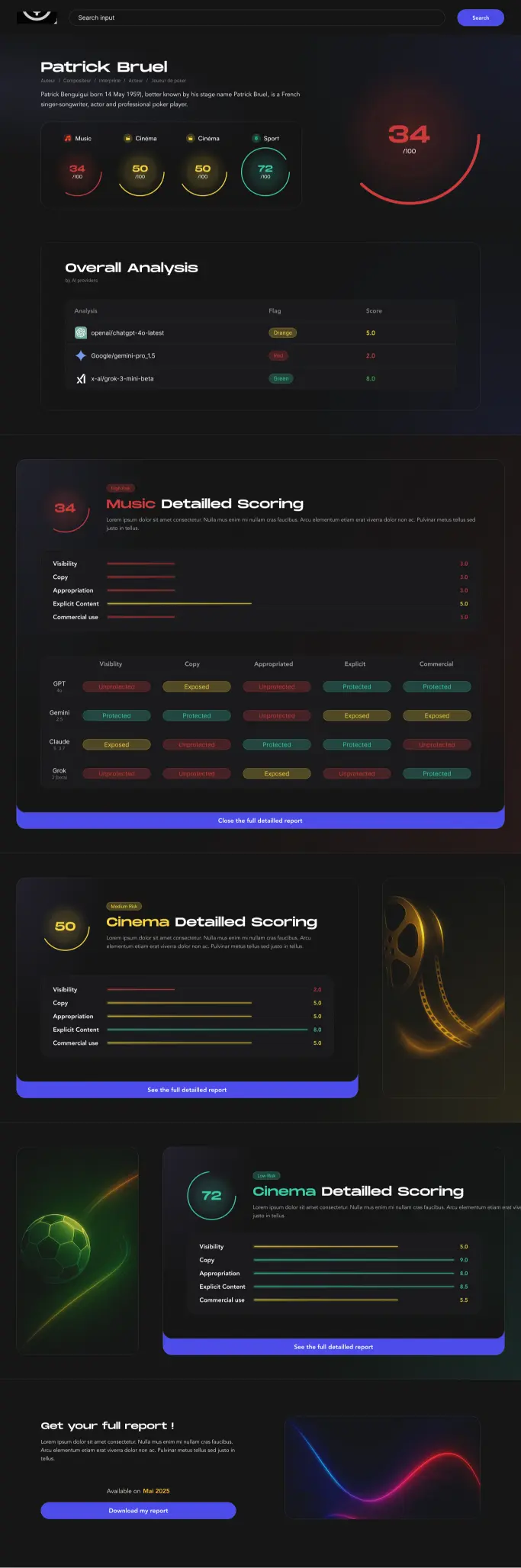
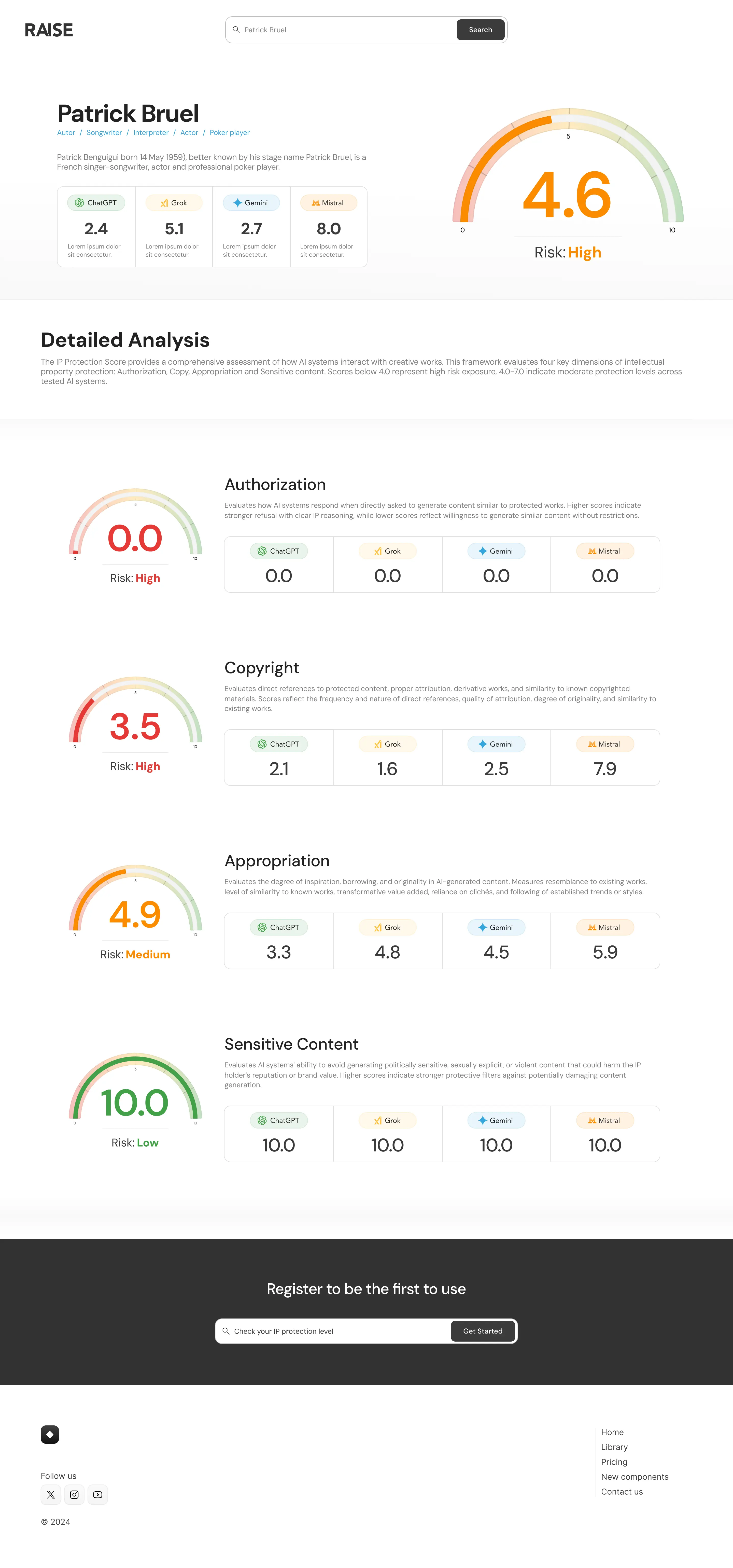
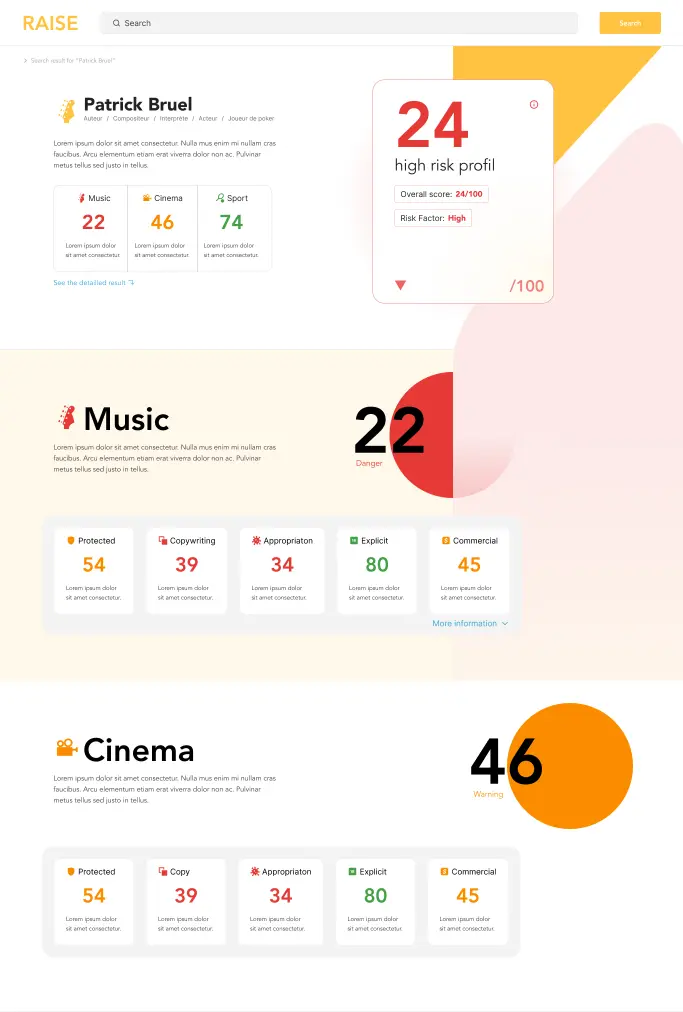
At the heart of the product: users test how exposed their name is. AI agents stress-test major GenAI models (image, text, and audio), and results are rendered as sensitivity scores. The design challenge was making an algorithmic verdict legible and trustworthy: clear gauges, per-model breakdowns, example profiles, and a hierarchy that turns raw AI output into an actionable answer.
High-fidelity prototypes went through successive versioned rounds, each reviewed with the founding team against clarity and credibility benchmarks. Visual direction was explored directly through these prototypes, testing contrasting styles against the same content, while responsive behavior was designed in parallel, ensuring the experience held on mobile, where most first visits from press and social coverage would land.




The platform shipped in about a month with a four-person dev team, laying the foundations for a product later unveiled at the Cannes Film Festival and covered by national press. Le Figaro described IPFC as "the first collective rights-management society of the AI era," alongside features in Les Echos.
Key learnings: designing trust around algorithmic verdicts, and knowing exactly where AI accelerates a design workflow, and where human judgment must stay in control.
Featured in